
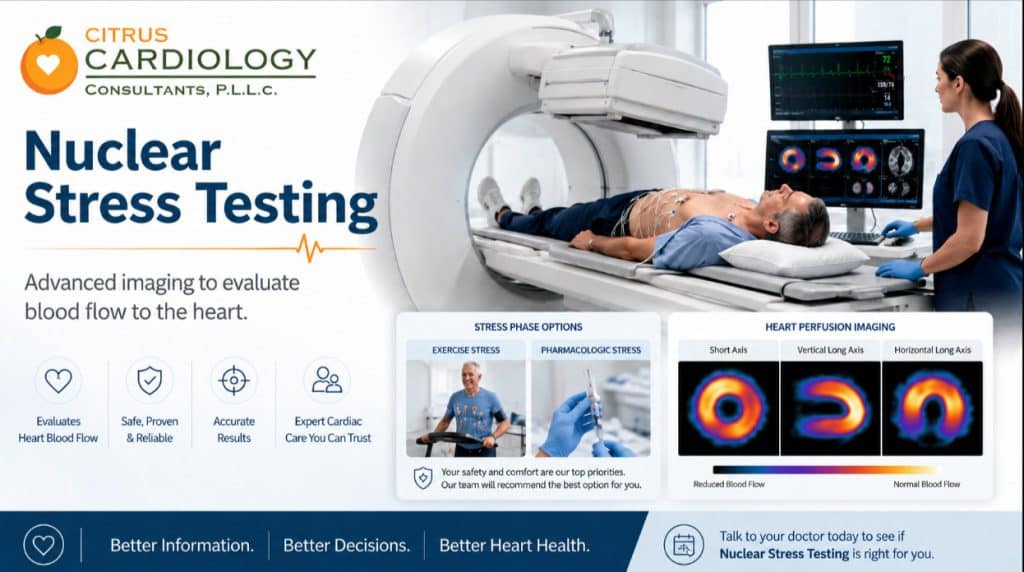
A nuclear stress test, also known as a nuclear exercise test or myocardial perfusion imaging, is a diagnostic procedure that assesses how well blood flows to your heart muscle at rest and during physical activity. It combines a standard exercise stress test with the injection of a small amount of radioactive tracer, allowing specialized cameras to capture images of your heart’s blood supply.
This cardiac stress test helps doctors determine if your heart receives enough blood from its arteries when working harder. By comparing images taken at rest and under stress, healthcare providers can identify areas of reduced blood flow, blockages, or damage, guiding treatment decisions and exercise recommendations.
What is the purpose of a nuclear stress test?
The primary purpose of a nuclear stress test is to evaluate the blood supply to your heart muscle, particularly under exertion. It helps identify if there are blockages in the coronary arteries that restrict blood flow, which could indicate coronary artery disease or assess the extent of existing heart conditions.
This heart stress test also assists physicians in determining appropriate exercise levels for patients and evaluating the effectiveness of treatments for heart disease. It provides crucial information about your heart’s functional capacity and overall health, aiding in personalized care plans.
How is a nuclear stress test procedure performed?
The nuclear stress test procedure typically involves two main phases: a rest phase and a stress phase. During the rest phase, a small amount of a radioactive substance, such as thallium-201 or technetium-99m sestamibi (Mibi), is injected into a vein, and images of your heart are taken using a computerized gamma camera.
For the stress phase, you will usually walk on a treadmill or use another form of exercise to elevate your heart rate. At peak exertion, another dose of the radioactive tracer is injected, and a second set of images is recorded. The images from both phases are then compared to detect differences in blood flow.
What are the key components of cardiac nuclear imaging?
Cardiac nuclear imaging, central to a nuclear stress test, relies on the use of radioactive tracers and specialized gamma cameras to visualize blood flow through the heart. These tracers are absorbed by heart muscle cells in proportion to their blood supply, allowing for detailed imaging.
- Radioactive Tracers: Substances like thallium-201 or technetium-99m sestamibi (Mibi) emit gamma rays that can be detected externally.
- Gamma Cameras: These sophisticated cameras detect the gamma rays emitted by the tracer, creating detailed 3D images of the heart’s blood flow.
- Image Comparison: By comparing images taken at rest and during stress, doctors can pinpoint areas of reduced blood flow, indicating potential blockages or damage.
Frequently Asked Questions
What does a nuclear stress test reveal about my heart?
It shows if your heart receives sufficient blood supply from its arteries when working harder, helping doctors identify blockages, assess damage, and determine safe exercise levels for you.
Are there different types of radioactive substances used?
Yes, common radioactive substances (isotopes) used in cardiac nuclear imaging include thallium-201 and technetium-99m sestamibi (Mibi). These allow gamma cameras to capture images.
How long does a nuclear exercise test typically take?
While the source doesn’t specify, a nuclear stress test generally takes a few hours, as it involves both rest and stress imaging phases, with waiting periods in between.
Is a nuclear stress test the same as a regular exercise stress test?
No, a nuclear stress test combines an exercise stress test with cardiac nuclear imaging, using a radioactive tracer to provide more detailed information about blood flow than a standard exercise test alone.
What are the risks associated with the radioactive tracer?
The radioactive dose is very small and considered safe. The risks are minimal, similar to other medical imaging procedures, and the benefits of accurate diagnosis typically outweigh them.
If you are experiencing symptoms like chest pain or shortness of breath, or if your doctor recommends an evaluation of your heart’s blood flow, a nuclear exercise test can provide valuable insights. Consult with cardiac specialists, such as those at Citrus Cardiology Consultants PLLC, to determine if this diagnostic tool is right for your specific health needs.
📅 Last updated: