
What Is Atrial Fibrillation Treatment? A Complete Guide for Patients
Last Updated: May 8, 2026
Introduction
Atrial fibrillation (AFib or AF) is the most common type of irregular heartbeat, affecting millions of adults in the United States. If you or a loved one has been diagnosed with atrial fibrillation, understanding your treatment options is an important step toward managing your heart health and reducing the risk of complications.
At Citrus Cardiology Consultants, P.L.L.C., our cardiologists work with patients to develop personalized atrial fibrillation treatment plans based on individual symptoms, overall health, and long-term goals. This guide explains what atrial fibrillation is, why treatment matters, and what options may be available to help you manage this condition.
What Is Atrial Fibrillation?
Atrial fibrillation is an irregular and often rapid heart rhythm that occurs when the upper chambers of the heart (the atria) beat out of coordination with the lower chambers (the ventricles). Instead of beating in a regular, organized pattern, the atria quiver or fibrillate.
According to the American Heart Association, atrial fibrillation affects more than 5 million Americans, and that number is expected to rise as the population ages. The condition can lead to blood clots, stroke, heart failure, and other heart-related complications if left untreated.
Why Cardiologists Recommend Atrial Fibrillation Treatment
Treatment for atrial fibrillation is recommended for several important reasons:
- Stroke prevention: AFib increases the risk of blood clots forming in the heart, which can travel to the brain and cause a stroke
- Symptom relief: Many patients experience palpitations, shortness of breath, fatigue, or chest discomfort
- Heart protection: Over time, untreated AFib can weaken the heart muscle and lead to heart failure
- Quality of life: Proper treatment helps patients return to normal activities with greater confidence
The Centers for Disease Control and Prevention (CDC) reports that people with atrial fibrillation have a five times greater risk of stroke than those with normal heart rhythms, making treatment essential.
What Conditions Can Atrial Fibrillation Treatment Help Manage?
Atrial fibrillation treatment addresses the arrhythmia itself and helps manage related conditions, including:
- Stroke risk reduction through blood thinner medications
- Heart rate control to prevent the heart from beating too fast
- Heart rhythm control to restore and maintain normal sinus rhythm
- Heart failure prevention by reducing strain on the heart muscle
- Associated symptoms such as palpitations, dizziness, and fatigue
Atrial Fibrillation Treatment Options
Treatment for atrial fibrillation typically involves one or more approaches:
1. Medications
Blood thinners (anticoagulants): Reduce the risk of blood clots and stroke. Common options include warfarin, apixaban, rivaroxaban, and dabigatran.
Rate control medications: Slow the heart rate to improve symptoms and heart function. Examples include beta-blockers, calcium channel blockers, and digoxin.
Rhythm control medications (antiarrhythmics): Help restore and maintain normal heart rhythm. These include medications such as amiodarone, flecainide, and propafenone.
2. Cardioversion
Cardioversion is a procedure that uses electrical shocks or medications to restore normal heart rhythm. It may be recommended when medications alone are not effective.
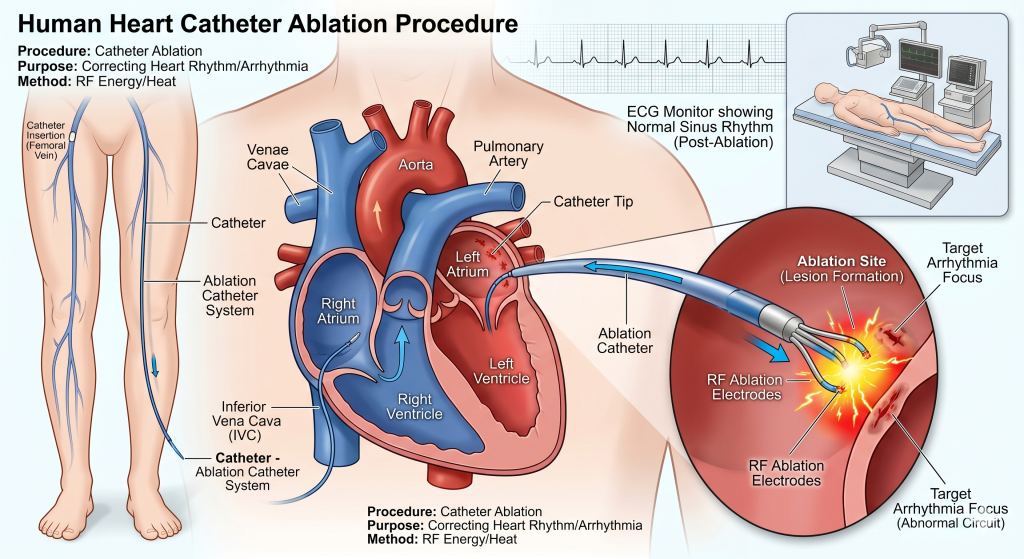
3. Catheter Ablation
Catheter ablation is a minimally invasive procedure that uses heat or cold energy to create small scars in the heart tissue, blocking the abnormal electrical signals that cause AFib. According to the American College of Cardiology, catheter ablation can be highly effective for selected patients, particularly those with symptomatic AFib that has not responded to medications.
4. Surgical Procedures
In some cases, surgical options such as the maze procedure may be recommended, typically when other heart surgery is already planned.
What Patients Can Expect Before Treatment
Before beginning atrial fibrillation treatment, patients at Citrus Cardiology can expect:
- A comprehensive evaluation, including medical history review and physical examination
- Diagnostic testing such as an electrocardiogram (ECG), echocardiogram, or Holter monitor
- Discussion of treatment options tailored to individual needs and preferences
- Explanation of the benefits and risks of each approach
Patients should always follow the specific instructions provided by their cardiology care team.
What Happens During Atrial Fibrillation Treatment?
The experience varies depending on the treatment selected:
Medication management: Patients take prescribed medications as directed and attend follow-up appointments to monitor effectiveness and adjust dosages as needed.
Cardioversion: Performed in a medical setting, this procedure typically takes less than an hour. Patients receive sedation, and monitored anesthesia care ensures comfort throughout.
Catheter ablation: This procedure usually takes 2 to 4 hours. A cardiologist inserts thin tubes (catheters) through blood vessels in the groin and guides them to the heart. Energy is delivered to specific areas to create scar tissue that blocks abnormal signals.
What Happens After Treatment?
Recovery and follow-up depend on the treatment approach:
After cardioversion: Most patients can go home the same day. Normal activities can typically resume within a day or two.
After catheter ablation: Patients may stay overnight for observation. Recovery usually takes a few days to a week. Follow-up appointments monitor healing and assess whether the procedure was successful.
Ongoing medication management: Regular follow-up visits help ensure medications are working effectively and monitor for any side effects.
Results are reviewed with the cardiologist, and treatment plans may be adjusted based on how well the heart responds.
Benefits of Atrial Fibrillation Treatment
Effective treatment offers several important benefits:
- Reduced stroke risk: Blood thinners significantly lower the chance of clot formation
- Symptom improvement: Many patients experience fewer palpitations, less fatigue, and improved exercise tolerance
- Better heart function: Controlling heart rate and rhythm helps protect the heart muscle
- Improved quality of life: Patients often feel more energetic and confident in daily activities
- Peace of mind: Knowing that the condition is being managed reduces anxiety for patients and families
Risks, Limitations, or Important Considerations
As with any medical treatment, there are important considerations:
Medication risks: Blood thinners increase bleeding risk. Patients should report unusual bruising or bleeding to their cardiologist. Some antiarrhythmic medications can have side effects that require monitoring.
Procedure risks: Cardioversion and catheter ablation carry small risks, including bleeding, infection, blood vessel damage, or heart perforation. These complications are uncommon but important to discuss.
Recurrence: Atrial fibrillation can return even after successful treatment, particularly catheter ablation. Some patients require additional procedures or ongoing medication management.
Individual results vary: Not every patient responds to treatment the same way. Regular follow-up with a cardiologist is essential to assess effectiveness and make adjustments.
When Should You Contact a Cardiologist?
Seek cardiology evaluation if you experience:
- Heart palpitations or a racing heartbeat
- Shortness of breath, especially with exertion
- Chest pain or discomfort
- Dizziness or fainting
- Unexplained fatigue
- Difficulty exercising
- A family history of heart disease or arrhythmia
If symptoms suggest a medical emergency, such as severe chest pain, difficulty breathing, or signs of stroke, call 911 immediately.
A Citrus Cardiology Perspective
At Citrus Cardiology Consultants, P.L.L.C., we understand that being diagnosed with atrial fibrillation can feel overwhelming. Our approach focuses on helping patients understand their condition, explore treatment options, and make informed decisions about their care.
We take time to explain what atrial fibrillation means for your specific situation, why certain treatments are recommended, and what you can expect at each step. Our goal is to provide clarity, coordinate care with your other healthcare providers when needed, and support you in managing your heart health over the long term.
Whether you are newly diagnosed or seeking a second opinion about your atrial fibrillation treatment plan, our cardiology team is here to help.
Frequently Asked Questions About Atrial Fibrillation Treatment
Is atrial fibrillation treatment painful?
Medication management is not painful. Procedures such as cardioversion and catheter ablation are performed with sedation or anesthesia to ensure patient comfort. Some patients experience mild discomfort or soreness after catheter ablation at the insertion site, which typically resolves within a few days.
How long does atrial fibrillation treatment take?
The timeline varies. Medication management is ongoing. Cardioversion takes less than an hour. Catheter ablation typically takes 2 to 4 hours. Recovery times vary based on the procedure and individual patient factors.
Do I need to take blood thinners forever?
Many patients with atrial fibrillation need long-term blood thinner therapy to reduce stroke risk. However, treatment plans are individualized. Some patients may be candidates for alternative approaches after discussion with their cardiologist.
Is catheter ablation safe?
Catheter ablation is generally safe and effective for appropriately selected patients. As with any procedure, there are risks, which your cardiologist will discuss in detail. The American College of Cardiology recognizes catheter ablation as a well-established treatment for atrial fibrillation.
When will I know if treatment is working?
Patients typically know within days to weeks whether medications or procedures have successfully controlled heart rhythm. Follow-up monitoring, which may include wearable devices or periodic ECGs, helps assess long-term success.
Can I exercise after atrial fibrillation treatment?
Most patients can return to exercise after treatment, though the timeline varies. Your cardiologist will provide specific guidance based on your procedure and recovery progress.
Does insurance usually cover atrial fibrillation treatment?
Most insurance plans cover medically necessary atrial fibrillation treatments, including medications, cardioversion, and catheter ablation. Coverage details vary, and our team can help you understand your benefits.
Why would my cardiologist recommend one treatment over another?
Treatment recommendations are based on several factors, including how long you have had AFib, your symptoms, your overall health, whether you have other heart conditions, and your personal preferences.
Key Takeaway
Atrial fibrillation is a manageable condition, and effective treatment can significantly reduce the risk of stroke, improve symptoms, and protect long-term heart health. Citrus Cardiology Consultants, P.L.L.C. helps patients understand their atrial fibrillation treatment options, what to expect during care, and how to move forward with greater confidence in managing their heart health.
Sources
- American Heart Association — https://www.heart.org/en/health-topics/atrial-fibrillation
- American College of Cardiology — https://www.acc.org/Latest-in-Cardiology/Features/Atrial-Fibrillation
- Centers for Disease Control and Prevention — https://www.cdc.gov/heartdisease/atrial_fibrillation.htm