
Holter Monitor: A Simple Way to Record Your Heart Rhythm During Daily Life
Some heart symptoms are easy to describe but difficult to capture. A patient may feel fluttering, skipped beats, dizziness, racing heartbeat, shortness of breath, or unexplained fatigue, but by the time they arrive at the doctor’s office, the heart rhythm may look normal. That is one reason a Holter monitor can be so helpful. It gives your cardiology team a longer look at your heart’s electrical activity while you go about your normal routine.
At Citrus Cardiology Consultants, PLLC, Holter monitoring may be recommended when a patient’s symptoms, medical history, or test results suggest that the heart rhythm needs closer evaluation. The goal is to identify patterns that may not appear during a brief office visit or standard electrocardiogram.
What Is a Holter Monitor?
A Holter monitor is a small, wearable device that continuously records the heart’s electrical activity, similar to an electrocardiogram, also called an EKG or ECG. Instead of recording for only a few seconds or minutes, a Holter monitor records over a longer period, commonly 24 to 48 hours, and sometimes longer depending on the type of monitor ordered.
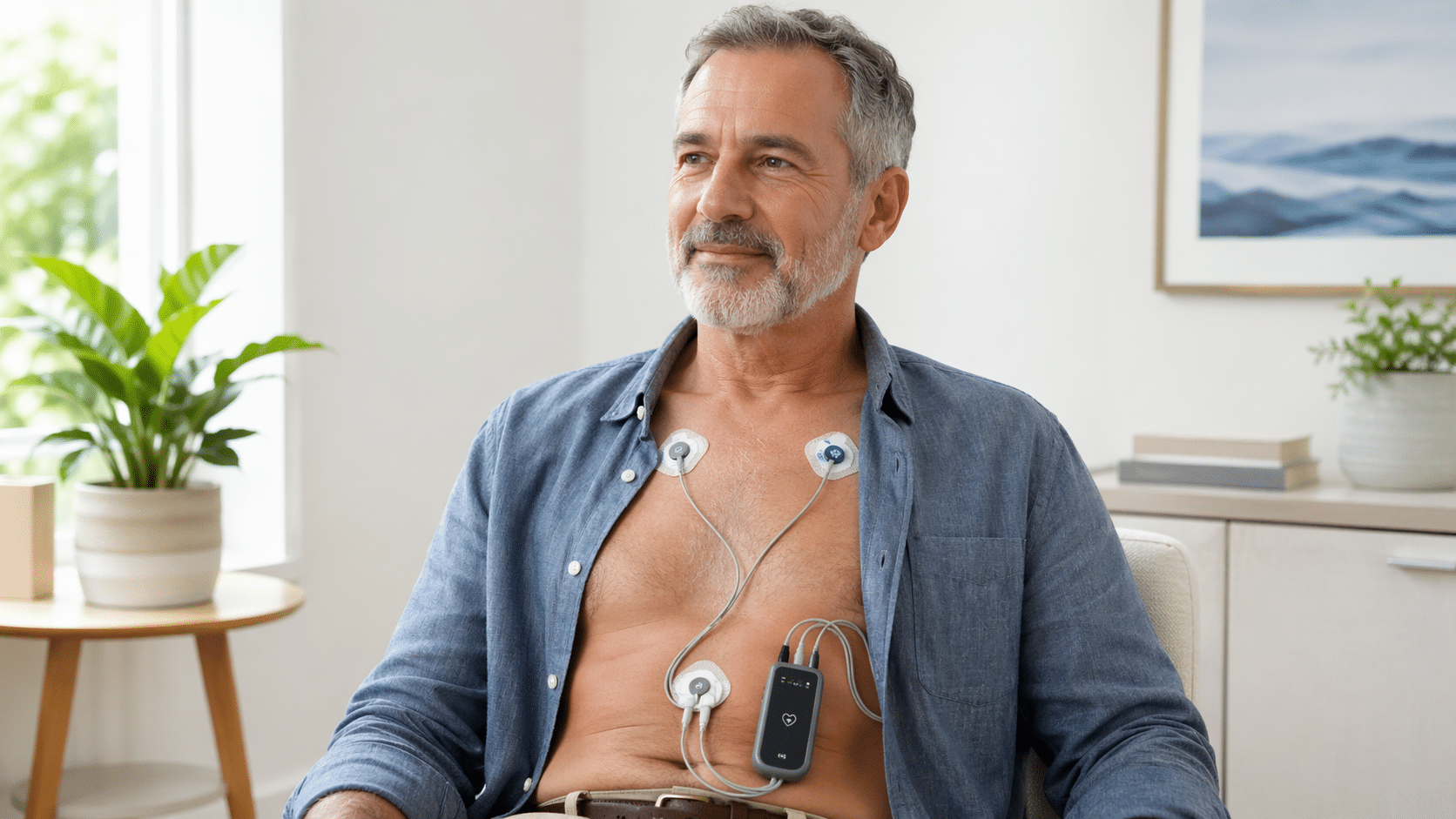
The monitor is usually worn under clothing. Small adhesive patches called electrodes are placed on the chest and connected to the recording device by thin wires. Some newer monitors may use a patch-style design. While you wear it, the device records your heart rate and rhythm during ordinary activities such as walking, working, eating, resting, and sleeping.
Why a Holter Monitor May Be Recommended
A Holter monitor is often used when a cardiologist wants to evaluate possible heart rhythm problems, also known as arrhythmias. These may include rhythms that are too fast, too slow, irregular, or intermittent. A regular EKG is useful, but it captures only a short snapshot of the heart. A Holter monitor provides a longer recording, which can help detect rhythm changes that happen only occasionally. The American Heart Association describes this longer recording as giving clinicians a broader “movie” of the heart’s electrical activity rather than a brief glimpse.
Your provider may recommend Holter monitoring if you have symptoms such as palpitations, fluttering, skipped beats, dizziness, fainting or near-fainting, unexplained shortness of breath, chest discomfort, unusual fatigue, or episodes of rapid heartbeat. It may also be used to check how well certain heart medications are working, evaluate rhythm concerns after a cardiac event, or monitor known conditions such as atrial fibrillation.
What Patients Can Expect
Getting a Holter monitor is typically simple and noninvasive. A member of the care team places the electrodes on your chest. The skin may be cleaned first so the patches can stick properly. Once the monitor is connected and working, you can usually leave the office and continue most of your normal daily activities.
During the monitoring period, you may be asked to keep a diary of symptoms and activities. This is important because it helps your cardiology team compare what you felt with what the monitor recorded at that same time. For example, if you felt lightheaded at 2:15 p.m., your provider can look at the rhythm strip from that exact period to see whether an abnormal rhythm was present. The American Heart Association recommends recording both activities and symptoms, along with the time of day, to give the care team a more complete picture.
You should follow the instructions provided by your cardiology office. In many cases, patients are asked to avoid bathing, swimming, or showering while wearing a traditional wired Holter monitor because moisture can affect the device or loosen the electrodes. You may also be told to avoid magnets, certain electronics, or other situations that could interfere with the recording, depending on the type of device used.
What the Holter Monitor Can Show
A Holter monitor can help identify rhythm patterns that may explain symptoms. It may show premature beats, pauses, episodes of atrial fibrillation, supraventricular tachycardia, slow heart rhythms, fast heart rhythms, or other irregularities. It can also show whether symptoms occur when the rhythm is normal, which is useful information as well.
The results are not usually interpreted instantly while you are wearing the device. After the monitoring period is complete, the device is returned or the data is transmitted, depending on the system used. The recorded information is then reviewed and interpreted. Your cardiology provider will consider the results along with your symptoms, medical history, medications, other test findings, and overall risk factors.
Benefits and Limitations
The main benefit of Holter monitoring is that it allows your cardiology team to evaluate your heart rhythm during real life, not just during a short office appointment. It is painless, noninvasive, and often very helpful when symptoms come and go.
However, a Holter monitor does not diagnose every heart condition. It focuses on heart rhythm and electrical activity. It does not directly show blocked arteries, heart valve structure, or how strongly the heart muscle pumps. Also, if symptoms do not occur during the monitoring period, the test may not capture the rhythm problem. In those cases, your provider may recommend a longer-term event monitor, patch monitor, mobile cardiac telemetry, or additional testing.
After the Monitoring Period
Once the monitoring period is finished, you will return the device or follow the instructions for submitting the data. Your cardiology team will review the recording and discuss the findings with you. Depending on the results, the next step may be reassurance, medication adjustment, additional testing, a longer monitoring period, or treatment for a specific rhythm condition.
It is important to remember that Holter monitor results are only one part of the full clinical picture. A rhythm that is harmless in one patient may require closer attention in another, depending on age, symptoms, heart history, other medical conditions, and test results. That is why individualized interpretation by an experienced cardiology team matters.
At Citrus Cardiology Consultants, PLLC, Holter monitoring is used as part of a broader approach to cardiovascular care. If you are experiencing palpitations, dizziness, skipped beats, racing heart episodes, fainting spells, or unexplained symptoms that may be heart-related, a cardiology evaluation can help determine whether a Holter monitor or another diagnostic test is appropriate.
Frequently Asked Questions About Holter Monitors
Is a Holter monitor painful?
No. The test is noninvasive. The electrodes stick to the skin, and some patients may notice mild skin irritation from the adhesive, but the monitor itself does not hurt.
Can I work while wearing a Holter monitor?
In most cases, yes. Patients are usually encouraged to continue normal daily activities unless their provider gives different instructions.
Can I shower with a Holter monitor?
With many traditional Holter monitors, you should not shower, bathe, or swim while wearing the device. Follow the specific instructions from your cardiology office.
What symptoms should I write down?
Record palpitations, dizziness, chest discomfort, shortness of breath, faintness, unusual fatigue, or any symptom your provider asked you to track. Include the time and what you were doing.
What if I do not have symptoms while wearing it?
The monitor may still provide useful information. If symptoms are infrequent, your provider may consider a longer-term monitor.
Is a Holter monitor the same as an event monitor?
Not exactly. A Holter monitor usually records continuously for a shorter period, while an event monitor may be worn longer and may record only during symptoms or detected rhythm changes.
When should I seek urgent medical care?
Call 911 or seek emergency care for chest pain, severe shortness of breath, fainting, signs of stroke, or symptoms that feel sudden, severe, or unusual.
📅 Last updated: